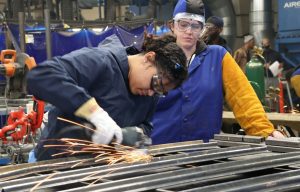
While many people still picture manufacturing as an outdated industry, the reality is that today’s metalworking shops are clean, safe, and driven by technology. It’s a field that needs problem-solvers who are ready to learn a skilled trade.
There are stable, well-paying opportunities available where you can use your hands and your mind to build a solid future, creating products that people depend on.
This article provides a practical guide to six key careers in the metalworking industry: Precision Machining, Tool and Die Making, Metal Fabrication, Welding, Forging, and Metal Stamping. We will cover what people in these roles do, what it takes to get started, and the opportunities available in each field.
Welding
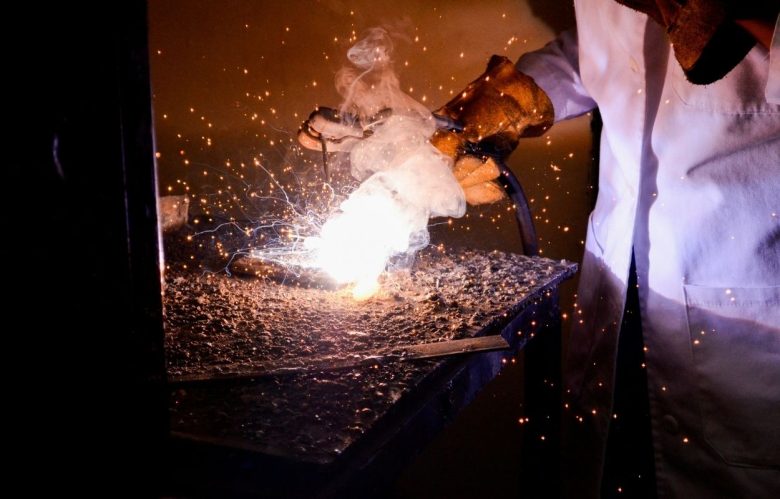
Welding is a trade focused on joining metals. Welders use specialized equipment to apply intense heat, fusing metal parts together to create a strong, permanent bond. It’s a fundamental skill required in countless industries to build, maintain, and repair products and infrastructure, from vehicles and buildings to manufacturing equipment and pipelines.
Why It’s a Great Career
- Strong Job Security: Welders are essential in major sectors like construction, manufacturing, and energy. This consistent demand creates stable career opportunities across the country.
- Good Earning Potential: The pay is competitive, and it increases significantly with experience and specialized certifications. Welders who can work with specific alloys or in challenging environments are always in high demand.
- Career Flexibility: Because the skill is so widely needed, welders have the flexibility to work in different industries and locations. The trade also offers opportunities for those who want to travel for work or even operate their own independent business.
A welder’s workday typically starts with reviewing project blueprints and work orders. From there, they prepare the metal by cleaning and positioning the components.
A significant part of the job involves setting up and calibrating welding equipment and ensuring all safety measures are in place. The core task is performing the weld, which requires a steady hand and a deep understanding of how different metals react to heat.
After the weld is complete, they often clean, grind, and inspect the joint to ensure it meets the required quality and strength standards.
How to Get Started
A common path to becoming a welder is through a certificate or diploma program at a technical college or vocational school. These programs provide foundational knowledge and hands-on practice in various welding processes.
Another excellent route is an apprenticeship, which combines paid, on-the-job training with classroom instruction. Regardless of the path, obtaining professional certification from an organization like the American Welding Society (AWS) is highly recommended, as it demonstrates your skill level to employers and can lead to better job prospects.
Precision Machining
Precision machining is a manufacturing process that uses advanced equipment to cut and shape material into highly accurate components. Machinists work from detailed engineering drawings and digital models to create finished parts that meet exact specifications.
Using technologies like CNC (Computer Numerical Control) milling and turning, they produce critical components for nearly every industry, including aerospace, medical, automotive, and electronics
Why It’s a Great Career
- Technology-Driven Work: This is a modern trade that puts you at the controls of sophisticated machinery and computer software. It’s a great fit for those who enjoy working with technology to solve practical challenges.
- Focus on Problem-Solving: The job requires more than just running a machine; it demands critical thinking. Machinists constantly make adjustments to optimize performance, troubleshoot issues, and ensure consistent quality.
- High Demand and Clear Advancement: Skilled machinists are essential to US manufacturing, which creates excellent job security. The trade offers competitive pay and clear career paths, with opportunities to advance into roles like CNC programming, quality assurance, or shop management.
A machinist’s day involves a mix of planning, setup, and quality control. The process often starts with analyzing a blueprint or a 3D computer model. From there, they plan the best approach to make the part, select the proper cutting tools, and set up the CNC machine. After loading the raw material, they run the program and monitor the equipment as it works.
A crucial part of the role is using precise measuring instruments to inspect the finished components, ensuring they meet the customer’s quality standards and tight tolerances.
How to Get Started
Many machinists begin with a two-year associate degree or a certificate from a technical college, which provides a strong foundation in theory and hands-on practice.
Apprenticeships are another common path, offering structured, paid on-the-job training. Regardless of the training route, success in this field depends on developing a good understanding of math (especially geometry and trigonometry), having a strong mechanical aptitude, and paying close attention to detail.
Tool and Die Maker
Tool and die makers are highly skilled, specialized machinists who build and maintain the tooling required for mass production.
They create the precision dies, molds, jigs, and fixtures that other manufacturing processes rely on. For example, while a press operator might stamp out thousands of metal parts, it’s the tool and die maker who builds the complex die that cuts and forms each part perfectly every time.
Why It’s a Great Career
- A Top-Tier Skilled Trade: This is one of the most respected trades in manufacturing. The work is challenging and requires a deep understanding of machining, materials, and mechanics, making it a great path for dedicated problem-solvers.
- Creative and Varied Projects: Unlike production work, every project for a tool and die maker can be different. You are building unique, custom tools, which keeps the work engaging and allows for creativity in finding the best way to build a functional tool.
- Excellent Compensation and Security: Due to the high level of skill and critical importance of their work, tool and die makers are among the best-paid professionals in the skilled trades and enjoy strong job security.
The work of a tool and die maker is project-based and requires a high degree of precision. A typical day involves reading and interpreting complex engineering drawings, then using a wide range of manual and CNC machinery to build tooling components from scratch.
After machining the individual parts, they carefully assemble, fit, and test the final tool to ensure it functions correctly. Much of their time is also spent on the maintenance, repair, and troubleshooting of existing tooling to keep production lines running smoothly.
How to Get Started
The most common and established path to becoming a tool and die maker is through a formal apprenticeship. These programs typically last 4–5 years and combine paid, on-the-job training with related classroom instruction.
A strong foundation from a technical college machining program is an excellent starting point and is often a prerequisite for securing an apprenticeship. Success in this trade requires advanced math skills, exceptional mechanical aptitude, patience, and an unwavering commitment to precision.
Metal Fabricator
Metal fabricators are the skilled tradespeople who build finished products and structures from metal components. They take raw materials like sheet metal, plate, and structural steel, then cut, bend, and assemble them into a final form.
This could range from building large structural frames for buildings to creating custom machine enclosures or equipment. It’s a trade that combines skills in layout, cutting, forming, and assembly.
Why It’s a Great Career
- Diverse, Project-Based Work: Fabricators often work on many different types of projects, which keeps the job interesting and engaging. You get to see a product come together from start to finish.
- Build a Versatile Skill Set: This career path allows you to become proficient in multiple valuable skills, including blueprint reading, welding, and operating various types of machinery.
- Tangible and Rewarding Results: At the end of the day, fabricators have created a finished, physical product. There is a great deal of satisfaction in seeing the direct results of your work.
The work of a metal fabricator is typically project-based and varied. A day could start with reading blueprints to understand the project’s requirements. From there, they might use shears, saws, or plasma cutters to cut the metal to the correct size, followed by using a press brake to bend the pieces into the required shapes.
A large part of the job involves assembling and fitting these components together, often using welding to create the final product. Fabricators see a project through from the initial raw material to the completed assembly.
How to Get Started
Common entry points for a career in metal fabrication are certificate programs at vocational schools that teach the core skills of welding, cutting, and blueprint reading.
Many companies also offer on-the-job training, allowing you to start as a helper and learn the trade from experienced professionals. Strong math skills, good spatial awareness, and the ability to read and interpret technical drawings are essential for success in this field.
Forging Operator
Forging is a manufacturing process where metal is heated to a high temperature and then shaped using immense force from a hammer or a press. Forging operators are the professionals who run this equipment. The process creates parts that are exceptionally strong and durable, which is why they are essential for high-performance applications in the automotive, aerospace, and defense industries.
Why It’s a Great Career
- Creating Critical-Strength Parts: Forging produces parts that are trusted in the most demanding applications. There is a lot of pride in creating components that ensure the safety and performance of cars, aircraft, and heavy machinery.
- Good Pay and Benefits: The physically engaging nature of the work and the high value of the products created mean these positions are well-compensated. Many forging jobs also offer excellent benefits and stability.
- A Physically Engaging Role: For those who enjoy active, hands-on work and thrive in a team environment, forging is an excellent fit. It’s a fast-paced job that keeps you moving.
The work environment in a forge is active and team-oriented. A forging operator’s day typically involves operating furnaces to heat metal to the correct temperature. Once the metal is ready, they work with a team to transfer it to a large press or hammer. They then operate the machinery to press or hammer the metal into shape.
The role requires constant communication with team members and a strong focus on safety protocols due to the heat and heavy machinery involved.
How to Get Started
Most forging operators learn the trade through on-the-job training. New hires often start as a helper or general laborer, where they learn the process and safety procedures from the ground up. With experience, they can advance to operating the forge press or hammer. A strong work ethic, a commitment to safety, and the ability to work well as part of a team are the most important qualifications for getting started in this field.
Stamping Press Operator
Metal stamping is a high-speed manufacturing process used to efficiently produce large quantities of identical parts. Stamping press operators manage the powerful, often automated machines that cut and form coils of sheet metal into finished shapes.
This process is essential for industries like automotive, appliance, and electronics that rely on the consistent, high-volume production of components.
Why It’s a Great Career
- A Great Entry Point into Manufacturing: Many stamping operator positions are entry-level, making it an excellent way to get started in the manufacturing industry without prior experience.
- Clear Path for Advancement: The skills learned as an operator provide a strong foundation for career growth. With experience, operators can advance to become a die-setter, a maintenance technician, or a production supervisor.
- Be Part of a High-Volume Industry: Stamping operators are at the center of America’s mass-production engine. It is a stable role that is critical for keeping major manufacturing supply chains moving.
An operator’s day is focused on keeping the production process running smoothly and efficiently. This starts with setting up the stamping press, which involves loading the correct die and feeding a large coil of sheet metal into the machine.
Once production begins, they monitor the press as it operates, ensuring the machine is running correctly and performing quality checks on the finished parts to make sure they meet specifications.
How to Get Started
Most stamping press operator jobs are learned through on-the-job training. A high school diploma or equivalent is typically the only educational requirement. Companies look for candidates who are reliable, have a strong focus on safety, and possess a good mechanical aptitude. Demonstrating attention to detail and a willingness to learn are key to starting and advancing in this career.
A career in metalworking offers more than just a job; it’s an opportunity to gain a valuable, in-demand skill and build a stable future. The paths are varied—from the technology-driven work of a CNC machinist to the hands-on skill of a fabricator—but they all share a common result: the pride of making things that are essential to the world around us.
Your future is in your hands. Start by looking up the skilled trade programs at your local community college or contacting manufacturers in your area to ask about apprenticeships. A rewarding career is waiting to be built.