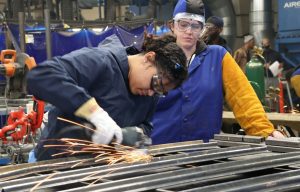
If you’re under 30 and trying to pick a career path that actually pays the bills, manufacturing is still one of the best “learn a skill → earn a living” lanes in the U.S. But there’s a catch: manufacturing opportunity isn’t spread evenly. It clusters. And those clusters determine how many entry-level openings exist, how fast you can move up, and what skills employers keep paying for.
Big manufacturing states give you more employers to bounce between, while fast-growing states can be easier places to break in because hiring is more active.
In this post, we’ll break down where manufacturing jobs are growing at the state and metro level, what those hotspots make (their dominant subsectors), and what skills matter in the places that are growing. The goal is to help you choose where to live and what to learn to find a manufacturing job.
Data note: All employment numbers in this post come from the BLS Current Employment Statistics (CES) State & Metro series for Manufacturing (All Employees), shown as Jan–Nov averages. “2019 → latest” compares Jan–Nov 2019 vs Jan–Nov 2025 (latest available as of early 2026).
The momentum states: where jobs are being added
It’s one thing to know where manufacturing is big. It’s another to know where it’s moving.
This section is about momentum: which states are growing the fastest percentage-wise.

| State | Employment Avg. (Jan–Nov 2025) | Since 2019 change (jobs) | Since 2019 % |
|---|---|---|---|
| Nevada | 67,491 | 8,273 | 14.0% |
| Utah | 154,891 | 17,418 | 12.7% |
| Florida | 430,345 | 43,700 | 11.3% |
| Idaho | 76,845 | 6,673 | 9.5% |
| Arizona | 192,418 | 14,509 | 8.2% |
| Alabama | 288,027 | 19,282 | 7.2% |
| Texas | 971,391 | 64,245 | 7.1% |
| North Dakota | 28,173 | 1,518 | 5.7% |
| Wyoming | 10,600 | 536 | 5.3% |
| Georgia | 427,300 | 21,255 | 5.2% |
Fast gain = more momentum.
These states might not have the biggest manufacturing workforce yet, but they’re growing quickly. That can be a sweet spot if you want to join early in the growth curve — when companies are building teams, adding shifts, and investing in training.
Some of the largest manufacturing states are huge because they’ve been manufacturing powerhouses for decades — not because they’re adding jobs right now. A big base can be stable, shrinking, or shifting toward different kinds of manufacturing.
In states with a deep ecosystem, it’s easier to start in one role (production, inspection, shipping/receiving) and move into higher-skill work (maintenance, machining, quality, programming) because there are simply more employers hiring for each rung.
The new hotspot metros
State maps tell you where manufacturing is big. Metro maps tell you where the hiring action is concentrated—because most manufacturing ecosystems are regional (plants + suppliers + logistics + training pipelines all cluster together). Most people don’t get hired by “Texas” — they get hired in DFW, Phoenix, Huntsville, or Tampa, inside a regional cluster of plants, suppliers, and training programs.
In the following tables, you'll find data about the cities with the most manufacturing jobs, absolute job gains since 2019, and percentage gains since 2019.
| Metro | Employment Avg. (Jan–Nov 2025) | 1-yr change (jobs) | 1-yr % | Since 2019 change (jobs) | Since 2019 % |
|---|---|---|---|---|---|
| Los Angeles–Long Beach–Anaheim, CA | 450,718 | -15,945 | -3.4% | -50,536 | -10.1% |
| Chicago–Naperville–Elgin, IL–IN | 403,873 | -3,691 | -0.9% | -8,736 | -2.1% |
| New York–Newark–Jersey City, NY–NJ | 331,073 | -155 | -0.0% | -13,927 | -4.0% |
| Dallas–Fort Worth–Arlington, TX | 309,164 | -2,300 | -0.7% | 21,518 | 7.5% |
| Detroit–Warren–Dearborn, MI | 247,491 | -3,036 | -1.2% | -11,291 | -4.4% |
| Houston–Pasadena–The Woodlands, TX | 239,045 | -91 | -0.0% | 2,900 | 1.2% |
| Minneapolis–St. Paul–Bloomington, MN–WI | 202,400 | 2,418 | 1.2% | 2,355 | 1.2% |
| Atlanta–Sandy Springs–Roswell, GA | 180,527 | 45 | 0.0% | 8,973 | 5.2% |
| Philadelphia–Camden–Wilmington, PA–NJ–DE–MD | 178,291 | -455 | -0.3% | -5,791 | -3.1% |
| Boston–Cambridge–Newton, MA–NH | 163,145 | -1,800 | -1.1% | -10,718 | -6.2% |
| Seattle–Tacoma–Bellevue, WA | 162,618 | -3,027 | -1.8% | -21,618 | -11.7% |
| Phoenix–Mesa–Chandler, AZ | 148,064 | -1,445 | -1.0% | 14,400 | 10.8% |
| San Francisco–Oakland–Fremont, CA | 131,327 | -8,573 | -6.1% | -15,182 | -10.4% |
| Cleveland, OH | 126,800 | 400 | 0.3% | -4,436 | -3.4% |
| Cincinnati, OH–KY–IN | 123,055 | 2,045 | 1.7% | 2,282 | 1.9% |
| Metro | Employment Avg. (Jan–Nov 2025) | 1-yr change (jobs) | 1-yr % | Since 2019 change (jobs) | Since 2019 % |
|---|---|---|---|---|---|
| Dallas–Fort Worth–Arlington, TX | 309,164 | -2,300 | -0.7% | 21,518 | 7.5% |
| Phoenix–Mesa–Chandler, AZ | 148,064 | -1,445 | -1.0% | 14,400 | 10.8% |
| San Antonio–New Braunfels, TX | 62,818 | 527 | 0.8% | 11,664 | 22.8% |
| Miami–Fort Lauderdale–West Palm Beach, FL | 102,009 | 100 | 0.1% | 10,573 | 11.6% |
| Austin–Round Rock–San Marcos, TX | 72,564 | -1,482 | -2.0% | 9,918 | 15.8% |
| Huntsville, AL | 35,755 | 82 | 0.2% | 9,845 | 38.0% |
| Palm Bay–Melbourne–Titusville, FL | 36,327 | 955 | 2.7% | 9,027 | 33.1% |
| Atlanta–Sandy Springs–Roswell, GA | 180,527 | 45 | 0.0% | 8,973 | 5.2% |
| Kansas City, MO–KS | 89,600 | -345 | -0.4% | 8,627 | 10.7% |
| Tampa–St. Petersburg–Clearwater, FL | 76,173 | 691 | 0.9% | 7,264 | 10.5% |
| Chattanooga, TN–GA | 40,509 | -545 | -1.3% | 6,345 | 18.6% |
| Ogden, UT | 33,918 | 173 | 0.5% | 5,027 | 17.4% |
| Salt Lake City–Murray, UT | 64,009 | 936 | 1.5% | 4,827 | 8.2% |
| Las Vegas–Henderson–North Las Vegas, NV | 30,236 | -200 | -0.7% | 4,536 | 17.7% |
| Gainesville, GA | 25,600 | 109 | 0.4% | 4,527 | 21.5% |
| Metro | Employment Avg. (Jan–Nov 2025) | 1-yr change (jobs) | 1-yr % | Since 2019 change (jobs) | Since 2019 % |
|---|---|---|---|---|---|
| Huntsville, AL | 35,755 | 82 | 0.2% | 9,845 | 38.0% |
| Palm Bay–Melbourne–Titusville, FL | 36,327 | 955 | 2.7% | 9,027 | 33.1% |
| San Antonio–New Braunfels, TX | 62,818 | 527 | 0.8% | 11,664 | 22.8% |
| Gainesville, GA | 25,600 | 109 | 0.4% | 4,527 | 21.5% |
| Provo–Orem–Lehi, UT | 24,809 | 264 | 1.1% | 4,282 | 20.9% |
| Chattanooga, TN–GA | 40,509 | -545 | -1.3% | 6,345 | 18.6% |
| Las Vegas–Henderson–North Las Vegas, NV | 30,236 | -200 | -0.7% | 4,536 | 17.7% |
| Ogden, UT | 33,918 | 173 | 0.5% | 5,027 | 17.4% |
| Austin–Round Rock–San Marcos, TX | 72,564 | -1,482 | -2.0% | 9,918 | 15.8% |
| Charleston–North Charleston, SC | 34,482 | -482 | -1.4% | 4,518 | 15.1% |
| Stockton–Lodi, CA | 23,209 | -291 | -1.2% | 2,700 | 13.2% |
| Miami–Fort Lauderdale–West Palm Beach, FL | 102,009 | 100 | 0.1% | 10,573 | 11.6% |
| Jacksonville, FL | 36,055 | -264 | -0.7% | 3,573 | 11.0% |
| Phoenix–Mesa–Chandler, AZ | 148,064 | -1,445 | -1.0% | 14,400 | 10.8% |
| Kansas City, MO–KS | 89,600 | -345 | -0.4% | 8,627 | 10.7% |
When you zoom in to the metro level, the “what to learn” part gets clearer: the fastest-growing manufacturing metros tend to hire for repeatable, transferable skill stacks — skills that show up whether the plant makes vehicles, electronics, aerospace components, or food products.
Skill stack #1: maintenance + automation basics. Growth regions keep investing in uptime: sensors, conveyors, robots, packaging lines, CNC cells, and preventive maintenance. If you can troubleshoot safely (lockout/tagout), read basic diagrams, use a multimeter, and handle routine maintenance, you’re valuable almost anywhere — and it’s one of the fastest lanes from entry-level into higher pay.
Skill stack #2: quality/inspection + process discipline. Fast-growing plants don’t just need people; they need consistency. That’s why you keep seeing roles tied to inspection, documentation, and standardized work: measuring parts, running checks, logging defects, following work instructions, and keeping processes stable. It’s not glamorous, but it’s a career accelerant — because quality skills travel across industries and often become a bridge into lead roles, tech roles, and supervisor tracks.
If you want a third “hard skill” that stacks well with both: CNC foundations. You don’t need to be a programmer on day one — but understanding setups, offsets, basic G-code concepts, measurement, and tolerances is a strong signal in any metro with metalworking, aerospace, or industrial supply chains.
What each state makes (and what jobs that creates)
Manufacturing isn’t evenly spread across the U.S. It clusters. And those clusters matter because “manufacturing jobs” aren’t one thing — the work in a state that’s heavy in aerospace looks different than the work in a state dominated by food processing, chemicals, or metalworking.
The point of this 50-state list is to help you decide where to aim your job search by looking at what each state makes. That tells you what kinds of plants are nearby, what the day-to-day work looks like, and what skills will get you hired faster.
Use this as a practical cheat sheet, not a perfect ranking. It’s meant to answer: “What’s the most common flavor of manufacturing here, where does it cluster, and what roles show up again and again?”
Once you know your state’s “manufacturing personality,” you can make smarter moves: target the right metro areas, pick a training path that matches local employers, and avoid wasting time learning a skill that’s rare where you live.
| State | Dominant manufacturing type (plain English) | Where it clusters (metros / corridors) | Typical roles you’ll see |
|---|---|---|---|
| Alabama | Automotive & aerospace manufacturing | Huntsville; Birmingham; Montgomery | Assemblers, industrial maintenance technicians, quality control inspectors, electricians |
| Alaska | Seafood / food processing | Anchorage; Kodiak; coastal hubs | Production workers, packaging operators, quality control inspectors, maintenance technicians |
| Arizona | Electronics / semiconductor-related manufacturing | Phoenix; Tucson | Process/production technicians, quality control inspectors, industrial maintenance technicians, electricians |
| Arkansas | Food processing | NW Arkansas; Little Rock area | Production workers, packaging operators, quality control inspectors, maintenance technicians |
| California | Food manufacturing (plus big aerospace/electronics pockets) | LA/Orange County; Bay Area; Central Valley | Assemblers, machinists, quality control inspectors, industrial maintenance technicians |
| Colorado | Food & beverage manufacturing | Denver; Greeley/northern CO | Production workers, packaging operators, maintenance technicians, quality control inspectors |
| Connecticut | Aerospace / precision manufacturing | Hartford area; New Haven area | Machinists, quality control inspectors, industrial maintenance technicians, electricians |
| Delaware | Chemicals / specialty chemical manufacturing | Wilmington area | Chemical operators, maintenance technicians, electricians, quality control inspectors |
| Florida | Food manufacturing (plus aerospace pockets) | Miami; Tampa; Jacksonville; Space Coast | Production workers, packaging operators, maintenance technicians, quality control inspectors |
| Georgia | Food & beverage manufacturing (plus auto/battery growth in-state) | Atlanta; Savannah corridor; Augusta | Production workers, maintenance technicians, quality control inspectors, electricians |
| Hawaii | Food manufacturing | Honolulu | Production workers, packaging operators, quality control inspectors, maintenance technicians |
| Idaho | Food processing (plus electronics in Boise area) | Boise; Twin Falls area | Production workers, maintenance technicians, quality control inspectors, electricians |
| Illinois | Food processing & industrial machinery | Chicago; Rockford; Peoria area | Machinists, maintenance technicians, quality control inspectors, assemblers |
| Indiana | Automotive & transportation equipment | Indianapolis; Fort Wayne; Elkhart-Goshen | Assemblers, machinists, quality control inspectors, maintenance technicians |
| Iowa | Food processing & agricultural equipment | Des Moines; Cedar Rapids; Quad Cities | Maintenance technicians, quality control inspectors, machinists, production workers |
| Kansas | Aerospace manufacturing | Wichita; Kansas City area | Assemblers, quality control inspectors, electricians, maintenance technicians |
| Kentucky | Automotive manufacturing | Louisville; Lexington; Bowling Green | Assemblers, machinists, quality control inspectors, maintenance technicians |
| Louisiana | Chemicals & refining corridor manufacturing | Baton Rouge; Lake Charles; New Orleans corridor | Chemical operators, electricians, maintenance technicians, quality control inspectors |
| Maine | Paper / wood products manufacturing | Portland; Bangor | Maintenance technicians, electricians, production workers, quality control inspectors |
| Maryland | Pharmaceuticals / chemicals | Baltimore; Frederick corridor | Quality control inspectors, maintenance technicians, electricians, production technicians |
| Massachusetts | Pharmaceuticals / medical devices / electronics mix | Boston area; Worcester | Production technicians, quality control inspectors, maintenance technicians, assemblers |
| Michigan | Automotive & parts manufacturing | Detroit; Grand Rapids; Lansing | Assemblers, machinists, quality control inspectors, maintenance technicians |
| Minnesota | Medical devices + food manufacturing mix | Twin Cities; Rochester | Assemblers, quality control inspectors, maintenance technicians, production technicians |
| Mississippi | Automotive/industrial manufacturing + food processing | North MS; Jackson area; Gulf Coast | Assemblers, welders, maintenance technicians, quality control inspectors |
| Missouri | Transportation equipment + food/chemicals mix | St. Louis; Kansas City | Assemblers, machinists, quality control inspectors, maintenance technicians |
| Montana | Food processing + wood products | Billings; Missoula | Production workers, maintenance technicians, quality control inspectors, equipment operators |
| Nebraska | Food processing | Omaha; Lincoln; Grand Island | Production workers, packaging operators, quality control inspectors, maintenance technicians |
| Nevada | Fabricated metals + light manufacturing mix | Las Vegas; Reno | Welders, machinists, maintenance technicians, quality control inspectors |
| New Hampshire | Electronics / precision products | Manchester–Nashua | Assemblers, production technicians, quality control inspectors, maintenance technicians |
| New Jersey | Pharmaceuticals & chemicals | Newark; Trenton; Camden | Quality control inspectors, production technicians, maintenance technicians, electricians |
| New Mexico | Electronics / defense-related manufacturing | Albuquerque | Production technicians, quality control inspectors, maintenance technicians, electricians |
| New York | Food manufacturing + precision/advanced niches | NYC/NJ fringe; Buffalo; Rochester; Syracuse | Machinists, assemblers, quality control inspectors, maintenance technicians |
| North Carolina | Food manufacturing + plastics/consumer products mix | Charlotte; Triad; Raleigh area | Production workers, maintenance technicians, quality control inspectors, electricians |
| North Dakota | Food processing | Fargo; Bismarck | Production workers, maintenance technicians, quality control inspectors, equipment operators |
| Ohio | Fabricated metals & industrial manufacturing | Cleveland; Dayton; Toledo; Columbus | Welders, machinists, quality control inspectors, maintenance technicians |
| Oklahoma | Fabricated metals / oilfield supply chain manufacturing | Oklahoma City; Tulsa | Welders, machinists, maintenance technicians, quality control inspectors |
| Oregon | Electronics + wood products mix | Portland; Salem | Production technicians, assemblers, quality control inspectors, maintenance technicians |
| Pennsylvania | Fabricated metals & industrial manufacturing | Philadelphia; Pittsburgh; Allentown | Welders, machinists, quality control inspectors, maintenance technicians |
| Rhode Island | Metal products / small precision manufacturing | Providence | Machinists, quality control inspectors, assemblers, welders |
| South Carolina | Automotive & aerospace manufacturing | Greenville–Spartanburg; Charleston | Assemblers, maintenance technicians, quality control inspectors, electricians |
| South Dakota | Food processing | Sioux Falls; Rapid City | Production workers, maintenance technicians, quality control inspectors, packaging operators |
| Tennessee | Automotive manufacturing | Nashville; Chattanooga; Memphis | Assemblers, maintenance technicians, quality control inspectors, electricians |
| Texas | Fabricated metals + chemicals/industrial mix | Houston; Dallas–Fort Worth; San Antonio | Welders, machinists, maintenance technicians, quality control inspectors |
| Utah | Electronics + industrial products mix | Salt Lake City; Provo; Ogden | Production technicians, assemblers, maintenance technicians, quality control inspectors |
| Vermont | Electronics + specialty food mix | Burlington | Assemblers, production technicians, quality control inspectors, maintenance technicians |
| Virginia | Shipbuilding/aerospace + industrial mix | Hampton Roads; Richmond | Assemblers, welders, electricians, maintenance technicians |
| Washington | Aerospace manufacturing | Seattle–Everett; Spokane | Assemblers, quality control inspectors, electricians, maintenance technicians |
| West Virginia | Chemicals + metals mix | Charleston; Huntington | Chemical operators, electricians, maintenance technicians, quality control inspectors |
| Wisconsin | Industrial machinery & metalworking | Milwaukee; Green Bay–Appleton | Machinists, welders, maintenance technicians, quality control inspectors |
| Wyoming | Petroleum/coal-related manufacturing (small base) | Cheyenne; Casper | Maintenance technicians, electricians, equipment operators, quality control inspectors |
Practical next steps
Pick your “target triangle.”
Choose one state + 1–2 metros you’d realistically live in for 1–3 years. Don’t pick a whole region. Pick a place.
Decide your lane: fastest hire vs highest ceiling.
- Fastest hire: production + quality (inspection, documentation, basic measurement).
- Highest ceiling: maintenance/automation or CNC/machining (systems + troubleshooting).
After 90 days, upgrade the plan based on reality.
If your metro is full of food plants, lean into sanitation/safety + maintenance + quality. If it’s aerospace, lean into inspection, documentation, and precision work. Adjust to the local “manufacturing personality,” not the internet’s idea of what’s cool.
Pull 25 job postings and look for repeats.
Search the metro + “manufacturing” plus a role (assembler, maintenance, machinist, quality). Copy the top 10 requirements you keep seeing into a note. That list becomes your learning plan.
Choose one short credential or training path (8–16 weeks).
Examples: community college certificate, union/apprenticeship entry, CNC fundamentals, industrial maintenance basics, metrology/inspection. The goal is a real skill + proof, not a perfect degree plan.
Get plant-adjacent experience while you train.
Even if it’s not your “forever” job: production, warehouse, shipping/receiving, machine operator helper. It gets you inside the ecosystem where promotions happen.
Network like a normal person (5 messages, not 50).
Message two local maintenance techs, two machinists, and one quality inspector in that metro (LinkedIn or friends-of-friends). Ask what entry paths are working locally and which employers are hiring.
If you match your location choice to where hiring is growing and learn one of the repeatable skill stacks (quality/inspection, CNC foundations, or maintenance/automation), you give yourself the fastest path to a real job and a career ladder. Start where the base is big or the momentum is high, then let the local industry mix tell you what to learn next.